

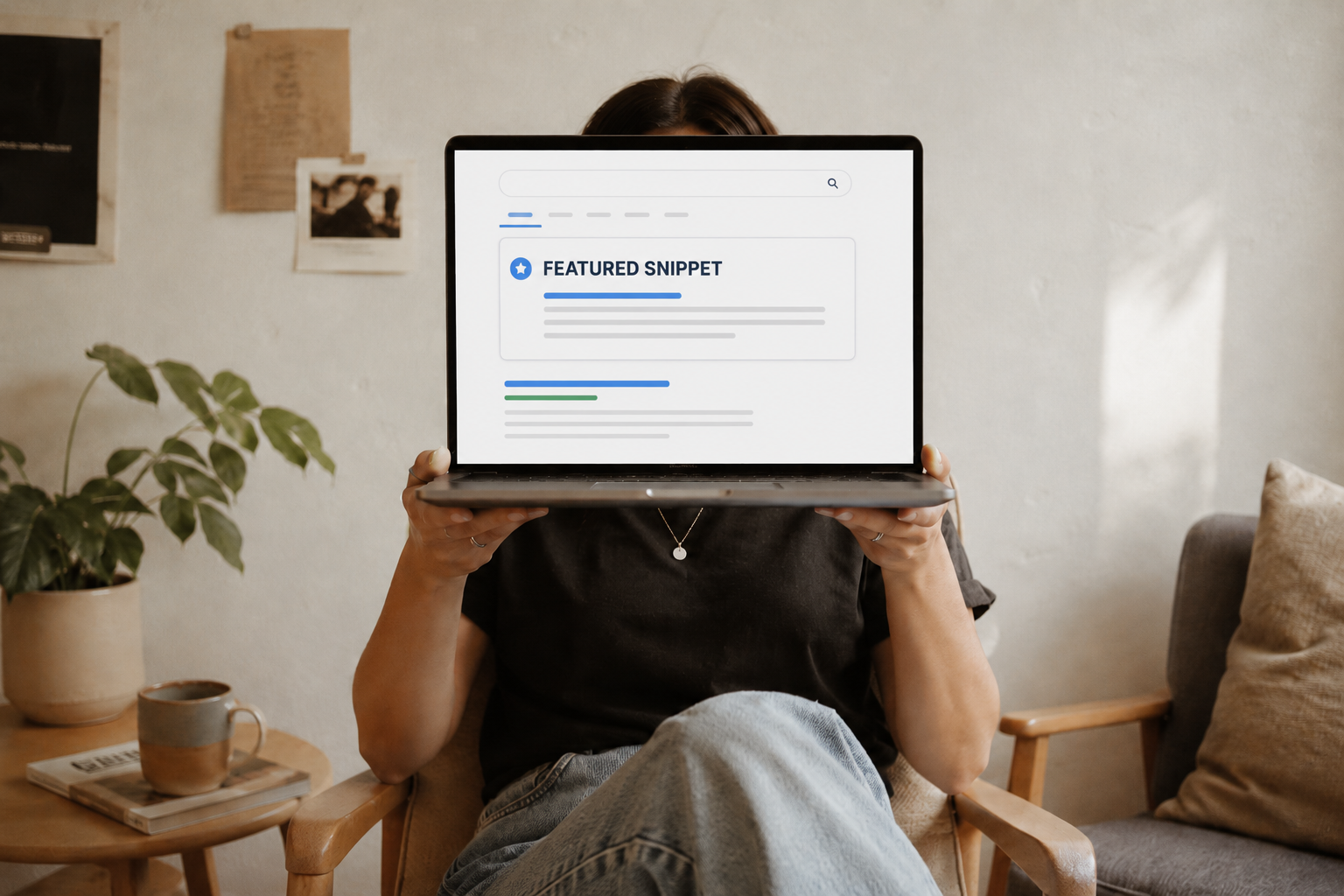
You’ve done it a thousand times. You type a question into Google and before you even scroll, the answer is sitting right there in a little box at the top of the page. No clicking required.
That box is a featured snippet. And if your business content is inside it, you’re in one of the best positions on the internet – for free.
Here’s what featured snippets are, why they matter more than ever in 2026, and how to give your content a real shot at winning one.
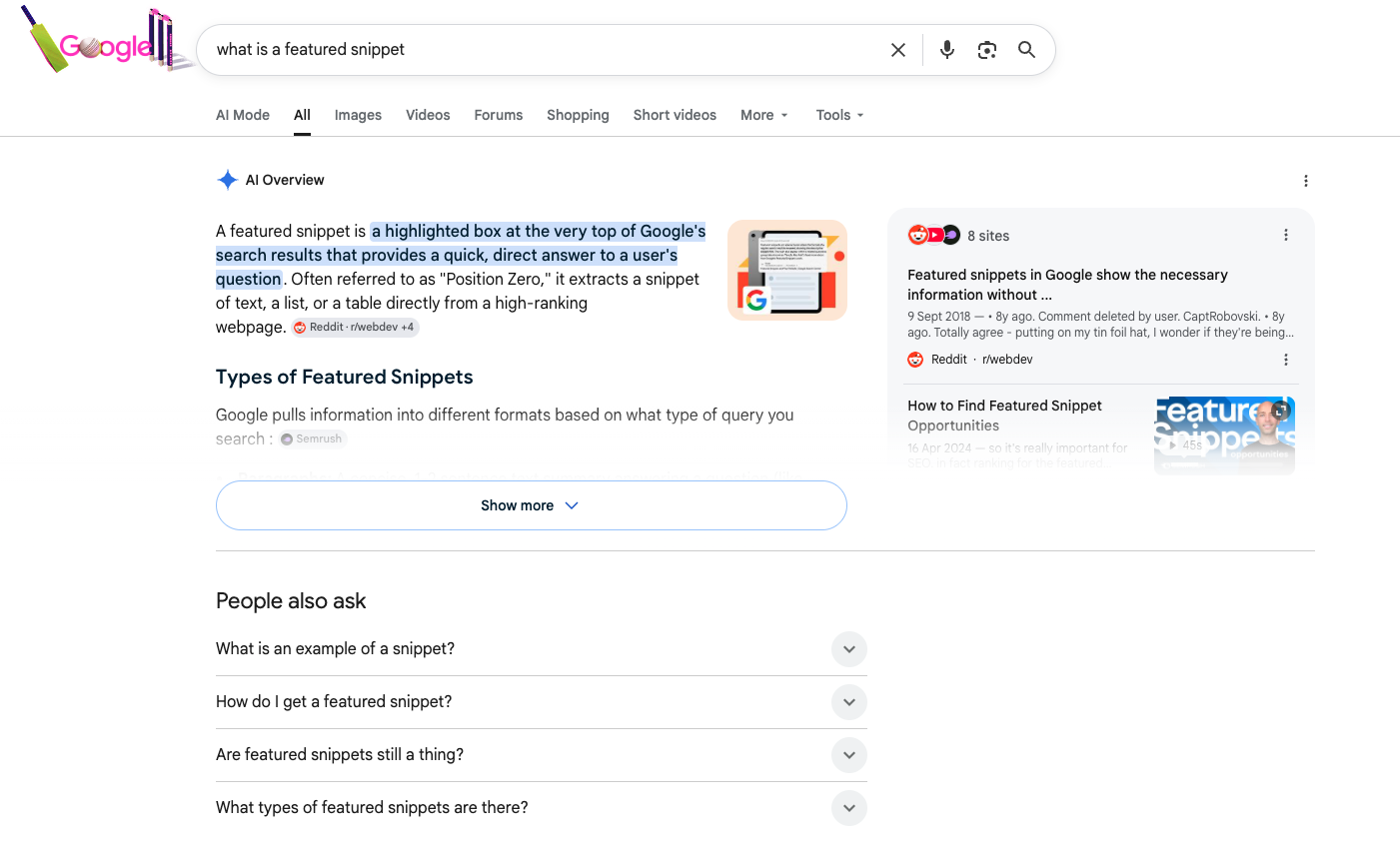
What is a featured snippet?
A featured snippet is a highlighted answer box that Google displays at the very top of search results – above all the regular organic listings. It’s pulled directly from a webpage that Google has decided best answers the search query.
You’ll sometimes hear it called “position 0” because it sits above the traditional position 1 result.
Google generates featured snippets automatically. You can’t pay for one. You earn it by having content that clearly and directly answers what someone is searching for.
There are three main types:
Paragraph snippets – a short block of text answering a “what is” or “why” question. The most common type.
List snippets – numbered or bulleted steps, great for “how to” queries.
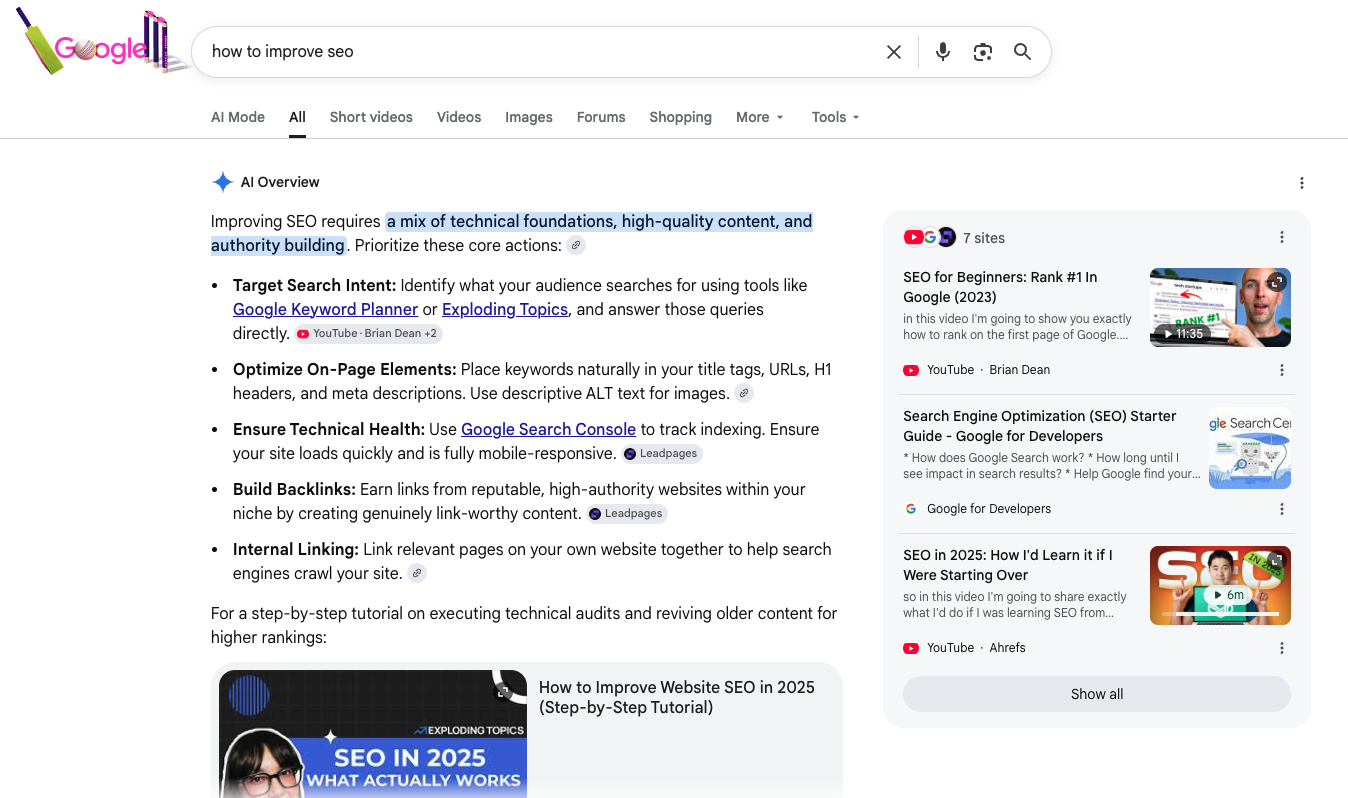
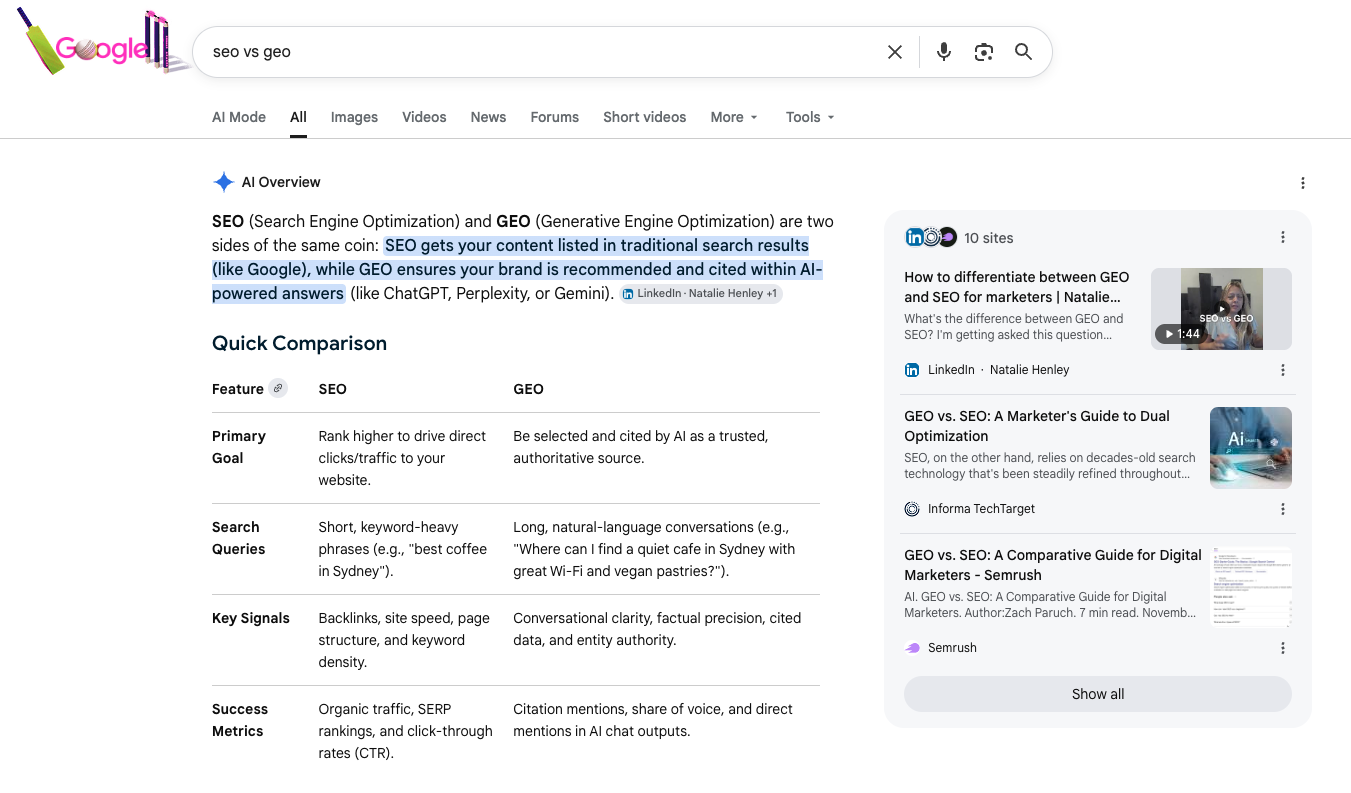
Table snippets – comparison or data-based answers, pulled into a table format.
Why does it matter for your business?
Winning a featured snippet puts you above every other organic result on the page. On mobile – where most searches happen – it often takes up the entire screen before anyone has to scroll.
That’s significant visibility for any business. But there’s another reason featured snippets matter that most people aren’t talking about yet.
AI tools pull from featured snippet content.
When someone asks ChatGPT, Perplexity, or Google’s AI Overviews a question, these tools frequently cite the same sources that rank for featured snippets. Structuring your content to win a featured snippet is one of the most practical things you can do for your GEO (Generative Engine Optimisation) as well as your traditional SEO.
One piece of well-structured content. Two channels of visibility. Worth the effort.
A word of honesty: featured snippets don’t always drive high click-through rates, especially if the snippet fully answers the question. The goal is to answer enough to earn trust and authority – but leave the reader wanting the full picture.
How to optimise your content for a featured snippet?
You don’t need to be a technical SEO expert to do this. You need to write clearly and structure your content well. Here’s how.
1. Answer questions directly – and early
Google is looking for content that gets to the point. If your page has a heading that asks a question, answer it in the next 40–60 words. Don’t build up to it. Don’t make readers hunt for it.
Think: heading asks the question, first paragraph answers it, rest of the section expands on it.
2. Match your format to the query type
Google matches snippet formats to search intent. If you’re targeting a “how to” query, use a numbered list. A “what is” query? Write a tight paragraph definition. A comparison? Consider a table.
Fighting the format Google expects is a losing battle. Work with it.
3. Target questions your audience is actually asking
The best featured snippet opportunities are specific, practical questions – the kind your customers ask you every week. Things like:
- How much does marketing cost?
- What does a marketing agency do?
- How long does SEO take to work?
- What’s the difference between SEO and paid ads?
These are winnable. “What is marketing” is not – Wikipedia has that locked up.
4. Use clear headings that mirror real search queries
Google needs to scan your page quickly and find the answer. Use H2s and H3s that are written as real questions or direct statements – not clever titles that obscure what the section is about.
“How long does SEO take?” is a better heading than “The SEO timeline question everyone asks.”
5. Lead with a tight answer, then expand
Write your answer in 40–60 words first. Clear, complete, standalone. Then keep writing – add context, examples, nuance. Google pulls the summary. Readers who want more click through.
This structure works for both featured snippets and AI citations. It’s how content gets referenced rather than just read.
6. Build the overall authority of the page
Featured snippets tend to go to pages that already have some ranking strength – Google isn’t going to pull a snippet from a page it doesn’t trust. So overall SEO health matters: relevant internal links, page load speed, mobile-friendly design, and content that genuinely serves the reader.
There’s no shortcut around the fundamentals.
Is it worth chasing for small businesses?
Yes – with realistic expectations.
You’re unlikely to outrank Wikipedia for a broad definition. But for niche, local, or industry-specific questions? Featured snippets are very much up for grabs.
A well-structured FAQ section on your website is one of the easiest ways to pick up featured snippets for the questions your customers are actually searching. You’re not starting from scratch – you’re writing down what you already know, in a format Google can work with.
It’s also worth knowing: once you win a featured snippet for a query, you tend to hold it. It’s not the most volatile part of search rankings. Get it right once and it can work for you for a long time.
The practical takeaway
Featured snippets aren’t a hack or a trick. They’re the result of writing clearly, structuring content well, and understanding what your audience is actually searching for. Which, when you think about it, is just good content strategy.
If you want help with your SEO, your content plan, or understanding how AI search is changing the game for businesses like yours – that’s exactly what we do. Let’s have a chat.